

At MidTown Dental Care, we provide comprehensive dental implant care in one convenient location. Our doctors At MidTown Dental Care, Dr. Laura Russell, Dr. AnnMarie Hoyme, Dr. Karla Schmidt, and Dr. Mark Crego provide comprehensive implant care in one convenient location. Our team can coordinate your treatment from advanced imaging and treatment planning through extractions or bone grafting when needed, implant placement, and your final restoration.
Whether you already wear dentures or are beginning to explore your options for replacing a full arch of teeth, we can help you understand whether implant-supported dentures are right for you.
Schedule a Dental Implant Consultation
What Are Implant-Supported Dentures?
Implant-supported dentures are restorations that replace multiple or all missing teeth while receiving support from dental implants placed in the jawbone.
Traditional dentures rest primarily on the gums and underlying tissues. Implant-supported dentures use strategically positioned dental implants to provide additional support and stability.
The dental implants function as artificial tooth roots. Once they have healed and integrated with the surrounding bone, they can help anchor the restoration.
The exact design of an implant-supported denture varies. Some restorations are removable by the patient for cleaning, while others may be designed to remain attached and be removed by a dental professional when necessary.
During your consultation at MidTown Dental Care, we can explain the options appropriate for your mouth, oral health, and treatment goals.
Why Do Traditional Dentures Become Loose?
A denture that once fit comfortably may become less stable over time.
One reason is that the jawbone naturally changes after teeth are lost. Tooth roots normally transfer forces into the jawbone during biting and chewing. When the teeth and roots are no longer present, the bone in those areas can gradually decrease.
As the shape of the jaw and gum tissues changes, a traditional denture may no longer fit as closely as it once did.
Patients may notice:
- Dentures moving while eating.
- Clicking or shifting when speaking
- Difficulty chewing certain foods
- Sore or irritated areas
- Increasing reliance on denture adhesive
- Changes in the way the denture fits
- Feeling self-conscious when talking or smiling
A loose denture should always be evaluated. In some cases, adjustment, relining, or replacement may help. For patients seeking greater stability, dental implants may offer an alternative.
Benefits of Implant-Supported Dentures
Adding dental implant support can change the way a denture functions and feels.
Greater Stability
One of the primary reasons patients consider implant-supported dentures is stability.
Dental implants create anchor points for the restoration, which can reduce unwanted movement compared with a traditional denture that relies primarily on the gums for support.
Improved Confidence When Eating
Loose dentures can make patients cautious about what they eat or cause them to chew primarily on one side of the mouth.
A more stable restoration can improve chewing efficiency and help patients feel more confident during meals. Your individual ability to eat certain foods will still depend on the restoration, oral health, and other factors.
More Confidence When Speaking and Smiling
Concern about a denture moving can make normal conversations stressful.
Improved stability can reduce some of the movement associated with conventional dentures, allowing patients to speak and smile with greater confidence.
Less Dependence on Denture Adhesive
Some traditional denture wearers use adhesive to improve retention.
An implant-supported restoration receives additional support from implants, potentially reducing reliance on adhesives. The amount of support depends on the specific restoration and implant configuration.
Jawbone Support
Dental implants are positioned within the jawbone and transfer forces to the surrounding bone during function.
While dental implants do not prevent all age-related or anatomical changes in the jaw, they can help maintain bone in the areas where implants are placed.
Implant-Supported Dentures vs. Traditional Dentures
Patients frequently ask whether implant-supported dentures are better than traditional dentures.
The biggest difference is how the denture is supported.
Traditional dentures generally rest on the gums and underlying tissues. Upper dentures may also use suction across the palate for retention.
Implant-supported dentures receive additional support from dental implants anchored within the jaw.
This can provide improved stability, particularly during chewing and speaking.
However, traditional dentures remain an appropriate treatment for many patients. They do not require implant surgery, generally involve a lower initial investment, and can restore an entire arch of missing teeth.
Implant-supported dentures require sufficient bone or the ability to prepare the jaw for implants, surgical treatment, a healing period, and a larger initial investment.
The right option depends on your health, anatomy, expectations, budget, and priorities.
How Many Dental Implants Are Needed to Support a Denture?
There is no single number that applies to every patient.
The number of implants needed depends on factors including:
- Upper or lower jaw
- Available jawbone
- Bone quality
- Shape and size of the jaw
- Type of denture or restoration
- Bite forces
- Location of available bone
- Overall oral health
- Whether the restoration will be removable or fixed
- Treatment goals
Some implant-supported dentures can be stabilized with fewer implants, while other full-arch restorations require additional implants to provide the planned support.
Rather than starting with a predetermined number, our doctors evaluate your anatomy and determine the implant configuration that is appropriate for your restoration.
Can I Get Dental Implants If I Already Wear Dentures?
Potentially, yes.
Many patients explore implant-supported dentures after wearing traditional dentures for years.
However, patients who have been missing teeth for a long time may have experienced changes in the jawbone. That does not automatically mean dental implants are no longer possible.
Advanced imaging allows us to evaluate the amount and location of available bone. If additional support is necessary, bone grafting may be incorporated into the treatment plan when appropriate.
Your existing denture, oral health, bone, medical history, and treatment goals all need to be evaluated before determining the best approach.
What Is the Implant-Supported Denture Process?
Implant-supported denture treatment involves several stages. Because MidTown Dental Care provides comprehensive implant care, these stages can be coordinated within one practice.
1. Comprehensive Consultation
We begin by discussing what you want to improve.
If you already wear dentures, tell us what is working and what is not. Difficulty chewing, looseness, sore areas, concerns about appearance, and reliance on adhesive are all important considerations.
If you still have teeth remaining, we evaluate their condition and determine whether they can be maintained or extraction should be considered.
2. Advanced 3D Imaging
Detailed imaging helps our doctors evaluate your jawbone and surrounding anatomy.
We assess the available bone and begin planning potential implant locations based on the restoration the implants will ultimately support.
3. Personalized Treatment Planning
Implant-supported denture treatment should be planned with the final restoration in mind.
Our doctors determine the appropriate implant configuration and explain any preparatory treatment that may be needed.
You will also have an opportunity to discuss the expected treatment sequence, healing process, restoration, and financial considerations before moving forward.
4. Extractions and Bone Grafting When Needed
Some patients need remaining damaged or failing teeth removed before implant treatment.
Bone grafting may also be recommended if additional bone support is needed in planned implant areas.
MidTown Dental Care can provide extractions, bone grafting, implant placement, and restorative treatment as part of your coordinated plan.
5. Dental Implant Placement
The dental implants are surgically placed at the planned locations in your jaw.
Our team also offers Yomi robot-assisted dental implant technology to provide real-time guidance during implant surgery based on the digital treatment plan.
6. Healing
The implants need time to integrate with the surrounding bone.
Healing time varies from patient to patient and depends on the number and location of implants, bone quality, overall health, and whether additional procedures were performed.
Our team will explain what you can expect at this stage and, when applicable, what type of restoration may be used during treatment.
7. Your Implant-Supported Denture
After the implants have achieved adequate stability, treatment can proceed with the planned restoration.
Your final denture is designed around your mouth, smile, bite, and implant positions to restore missing teeth and provide the planned level of support.
Yomi Robot-Assisted Technology for Denture Implant Treatment
When multiple implants will work together to support a restoration, careful implant planning is especially important.
MidTown Dental Care uses Yomi robot-assisted dental implant technology to support implant placement.
Detailed imaging and digital treatment planning allow the intended implant positions to be established before surgery. During the procedure, Yomi provides the dentist with real-time guidance and haptic feedback based on that plan.
The robot does not perform the surgery independently. Your MidTown Dental Care dentist remains in control of the procedure while using Yomi as an advanced guidance tool.
This technology can be particularly valuable when planning several implants that must work together to support a larger restoration.
Visit our Yomi Robot-Assisted Dental Implants page to learn more about how this technology is used.
Experienced Implant Dentistry at MidTown Dental Care
Full-arch tooth replacement involves both surgical and restorative planning. Having those parts of treatment coordinated within one practice can make the process easier to understand and manage.
Our doctors, Dr. Laura Russell, Dr. AnnMarie Hoyme, Dr. Karla Schmidt, and Dr. Mark Crego, combine decades of experience with modern dental technology and personalized treatment planning.
Dr. Russell has practiced dentistry for more than 20 years and has been instrumental in bringing advanced technology into MidTown Dental Care. Dr. Hoyme has more than 15 years of experience and completed a general practice residency following dental school. Dr. Schmidt graduated from Marquette University School of Dentistry and completed a general practice residency at Loyola University in Chicago. Dr. Crego has more than 40 years of dental experience and a particular interest in implant placement and restorative crown-and-bridge dentistry.
Together, our team can provide treatment, from implant planning and bone grafting, when necessary, through implant placement to your final restoration.
Helping Patients Smile With Confidence Again
Choosing implant treatment is a significant decision, and patient experiences can provide helpful insight into the care you can expect.
After receiving a dental implant at MidTown Dental Care, Sharese Neal left a five-star Google review praising her dental surgeon, the staff, the office’s cleanliness, and being seen on time.
She also shared something that gets to the heart of why many people choose implant dentistry: she was finally able to “smile with confidence again.”
For patients dealing with extensive tooth loss or unstable dentures, restoring that confidence can have a meaningful impact on everyday life.
How Much Do Implant-Supported Dentures Cost?
The cost of implant-supported dentures varies because several components of treatment must be considered.
Factors affecting cost can include:
- Number of implants required
- Upper or lower arch treatment
- Whether the remaining teeth need extraction
- Amount of available jawbone
- Need for bone grafting.
- Complexity of implant placement
- Type of final denture or restoration
- Materials used
- Dental insurance benefits
- Individual treatment needs
Because implant-supported dentures involve implant surgery and a customized restoration, they typically require a greater initial investment than conventional dentures.
However, cost should be considered alongside stability, function, maintenance needs, treatment goals, and differences among available tooth-replacement options.
After your evaluation, our team can provide a personalized treatment plan and explain the associated fees.
Financing Implant-Supported Dentures
We understand that full-arch implant treatment can represent a significant financial investment.
MidTown Dental Care offers several financing options, including CareCredit, Cherry, and Sunbit. In-house financing is also available for certain procedures.
We accept many traditional dental insurance plans and are preferred providers for most PPO plans. Coverage for dental implants and implant-supported restorations varies by plan.
Our team can review applicable insurance benefits and available payment options so that you understand the financial side of your treatment before making a decision.
Tired of Dealing With Loose or Uncomfortable Dentures?
Schedule a consultation with MidTown Dental Care to learn whether dental implants could give your restoration greater stability.
Schedule Your Implant Consultation
Implant-Supported Denture FAQs
Are implant-supported dentures removable?
Some implant-supported dentures are designed so the patient can remove them for cleaning, while others are designed to remain attached and are removed by a dental professional when necessary. We can explain which options are appropriate for your needs.
How many implants do I need for implant-supported dentures?
There is no universal number. The appropriate number depends on your jaw, available bone, restoration type, bite forces, and treatment goals. Advanced imaging and treatment planning allow your dentist to determine an appropriate implant configuration.
Are implant-supported dentures better than regular dentures?
Implant-supported dentures generally provide greater stability because dental implants help anchor the restoration. Traditional dentures do not require implant surgery and may be appropriate for patients who prefer or require a nonsurgical option. The better choice depends on your individual circumstances.
Can I convert my existing dentures to implant-supported dentures?
Sometimes an existing denture can potentially be incorporated into implant treatment, but many patients require a new restoration designed specifically for their implants. Your dentist needs to evaluate the fit, condition, design, and strength of your current denture before determining whether it can be used.
Can I get implant-supported dentures if I have bone loss?
Bone loss does not automatically prevent implant treatment. The amount and location of remaining bone must be evaluated with appropriate imaging. Bone grafting or other modifications to the treatment plan may be recommended depending on your anatomy.
Do implant-supported dentures feel more like natural teeth?
Implant support can provide greater stability than conventional dentures, particularly during chewing and speaking. However, an implant-supported denture is still a dental prosthesis and will not feel exactly like natural teeth.
Do implant-supported dentures need adhesive?
Many implant-supported restorations receive their retention and stability from the dental implants rather than relying primarily on denture adhesive. Whether any additional products are needed depends on the specific restoration.
How long do implant-supported dentures last?
Dental implants are designed for long-term use, but both the implants and restoration require ongoing care. The denture itself can experience wear and may eventually require adjustment, maintenance, repair, or replacement. Oral hygiene, smoking, health, bite forces, and professional dental care can affect longevity.
How do you clean implant-supported dentures?
Cleaning requirements depend on whether your restoration is removable or fixed. Daily cleaning around the implants and restoration is essential. Your dental team may recommend specialized brushes, flossing aids, a water flosser, or other tools based on your restoration.
Am I too old for implant-supported dentures?
Age alone does not determine whether someone can receive dental implants. Overall health, healing ability, medications, jawbone, gum health, and other factors are more important. Healthy older adults may still be candidates for implant treatment after an appropriate evaluation.
Discover a More Stable Way to Replace Missing Teeth
Living with missing teeth or a loose denture can affect the foods you choose, the way you speak, and how comfortable you feel smiling around other people. Dental implants may provide the additional support needed to change that experience.
At MidTown Dental Care, Dr. Laura Russell, Dr. AnnMarie Hoyme, Dr. Karla Schmidt, and Dr. Mark Crego provide comprehensive implant treatment in Wauwatosa. Our team can coordinate advanced imaging, extractions, bone grafting when necessary, implant placement, Yomi robot-assisted technology, and your final restoration within one practice.
If you are considering implant-supported dentures in Wauwatosa, visit MidTown Dental Care at 8726 W. North Ave., Wauwatosa, WI 53226. Schedule a consultation to learn whether implant-supported dentures or another tooth-replacement option is right for your smile.
Schedule Your Dental Implant Consultation
The only FDA-cleared robotic device for dental surgery
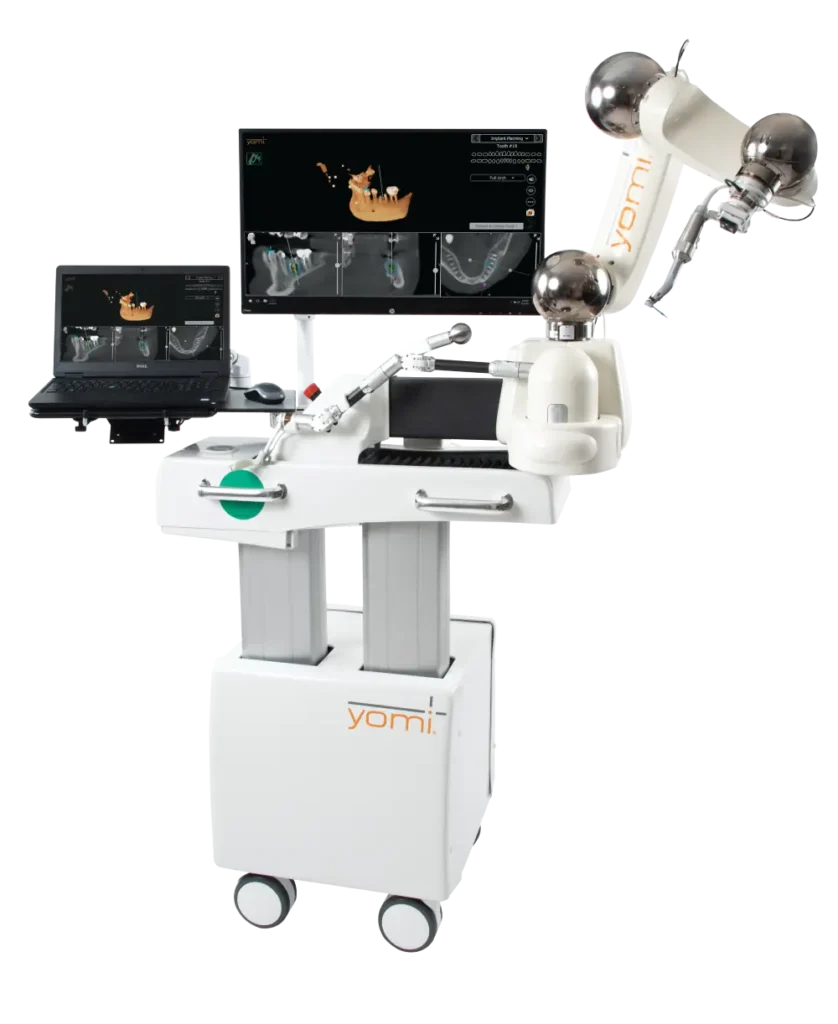

We’re proudly offering Yomi®, the only FDA-cleared robotic platform designed for dental implant surgery. Yomi tracks movements in real-time and prevents any
off-plan movements through haptic feedback and multisensory guidance. Clinical research has shown that Yomi is the most accurate modality for implant surgery.


